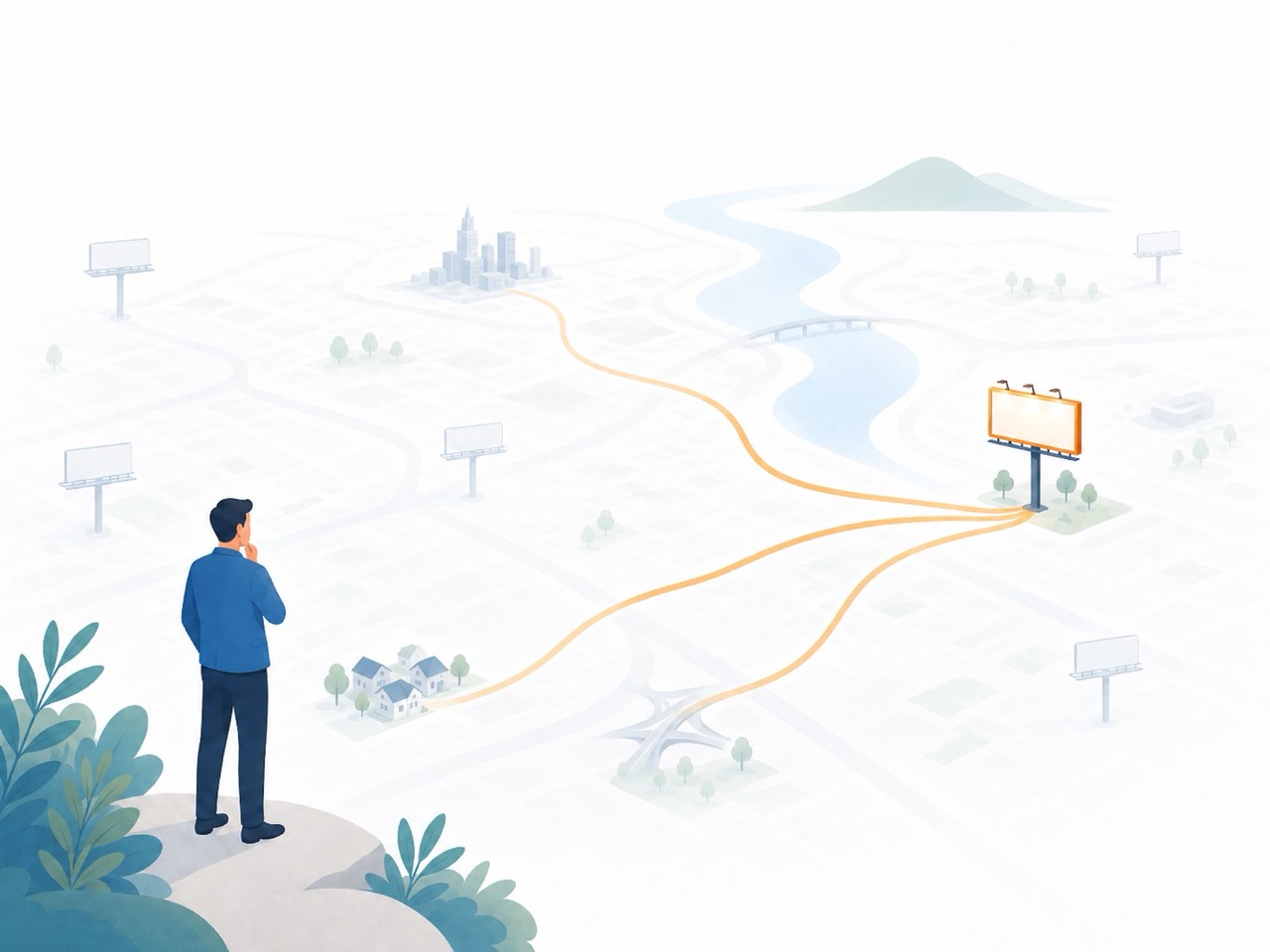
At some point, most billboard operators ask some version of this: how many faces do I need before a billboard website is actually worth investing in? The honest answer is fewer than most expect — though face count turns out to be the wrong benchmark anyway.
After working with billboard operators for several years, I’ve found that face count is almost never the right benchmark. What matters more is whether your business has outgrown the way you’re presenting it online. That can happen at 25 faces just as easily as it can at 100.
It’s a Growth Question More Than a Size Question
Most operators don’t decide they need a better billboard website because they hit some milestone. Something else triggers it first. They add inventory in a new corridor. They want landowners to take them more seriously. Their sales process starts feeling like it’s running on duct tape — manually emailing PDFs, re-explaining the same markets, answering the same questions week after week. The website hasn’t changed, but the company has.
One operator we work with, Fluhman Outdoor, was in exactly that position. They were growing steadily and wanted their website to reflect that — not just in how it looked, but in how it functioned. They weren’t after a brochure with a new coat of paint. They needed a site that could scale alongside their inventory, one that made it easier for advertisers to understand their reach and for the team to present new locations without rebuilding something every time. When we started working together, they were running around 350 faces. They’re well over 550 now, and the site has grown with them throughout. That alignment between the website and the operation is a better benchmark than any face count.
At 5–20 Faces: A Great Billboard Website Can Help Prove You’re Legitimate
At this stage, you probably don’t need a complicated website. But you do need something that clearly tells the story — who you are, where you operate, and how advertisers or landowners can reach you. Even if most of your business comes through relationships, people still look you up. When they do, the site should confirm you’re a real, established operator. A clean and credible presence matters more than a feature-heavy one at this size.
The most common mistake at this stage is having nothing at all, or having something so outdated it works against you.
At 20–50 Faces: The Website Starts Carrying More Weight
In this range, a basic digital business card usually isn’t enough anymore. Advertisers start asking real questions — specific locations, traffic exposure, what’s available near a certain road or retail corridor. If your website can’t help answer any of that, your team picks up the slack manually. That’s manageable when it happens occasionally. When it becomes routine, it’s costing you time you don’t need to spend.
A good website at this stage helps advertisers understand your inventory before they ever reach out, which means the conversations you do have start at a better place.

At 50–100 Faces: Inventory Presentation Becomes Important
As the portfolio grows, how you present locations starts to matter more. A list of markets isn’t enough. A generic gallery page isn’t enough either. Advertisers want to understand where your boards are, what they look like, and whether they’re relevant to what they’re trying to accomplish. Industry organizations like Geopath have helped standardize audience measurement and location evaluation across the out-of-home industry, raising expectations for the information advertisers expect before starting a conversation.
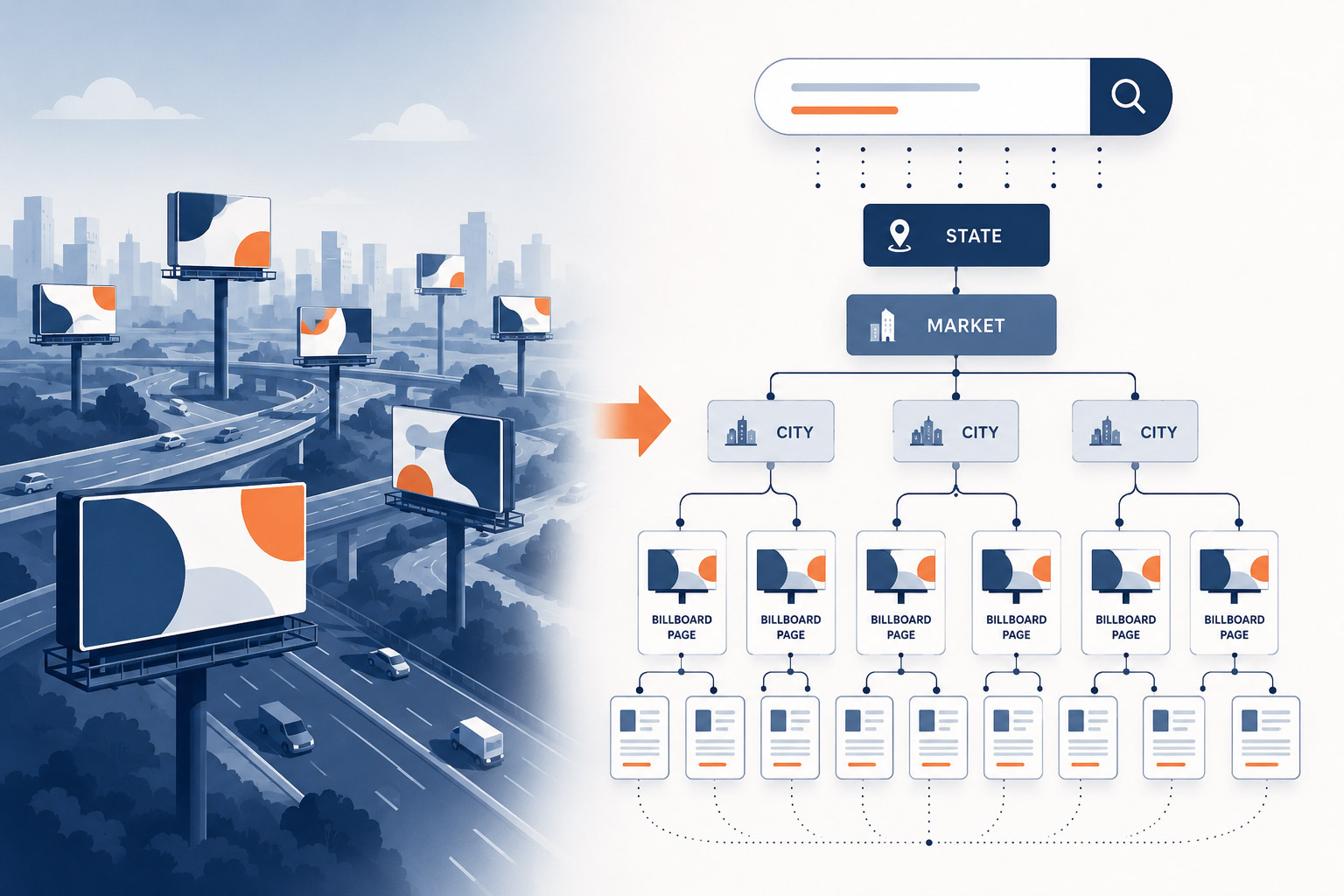
This doesn’t mean every operator needs public pricing or live availability. Some prefer to keep that conversation direct, and there’s nothing wrong with that approach. But advertisers shouldn’t have to guess whether you have inventory worth considering. Well-organized location pages, market coverage maps, and clean photography can do a lot of that work without replacing the sales conversation — they just make it more productive when it happens.
At 100+ Faces: The Billboard Website Becomes Part of the Operation
Once you’re past 100 faces, the billboard website often becomes operational infrastructure whether it was designed that way or not. Inventory changes constantly. New structures go up, old ones come down, availability shifts. If the site isn’t built to keep up with that, it falls behind quickly — and an outdated site at this scale doesn’t just look bad, it actively creates problems. Salespeople work around it. Advertisers ask for information that should already be findable. Landowners look you up and see something that doesn’t reflect the company you’ve actually built.
The question at this stage isn’t whether you need a website. It’s whether the one you have is helping the operation run better, or quietly costing you credibility.
One Benefit That Doesn’t Get Talked About Enough
Here’s something I rarely hear mentioned, but I’ve seen it matter in practice: keeping install photos current on your billboard website isn’t just good for advertisers. It can help you catch errors in your own records.
One operator we work with maintains up-to-date installation photos on their site — a dedicated page for each structure, reflecting the board as it actually exists in the field right now. Over time, they found that the site became a useful cross-reference when something didn’t line up in their paperwork. Because the billboard website was kept current, it functioned as a working inventory record. A discrepancy on paper would sometimes surface because the website showed something different from what was documented.
That kind of value doesn’t show up in a marketing pitch, but it’s real. And it applies whether you have 10 faces or 1,000. A well-maintained site isn’t only a sales tool — it can become a lightweight operational reference that keeps everyone working from accurate information.
The Number That Actually Matters
A 25-face operator that’s actively growing, pursuing advertisers in new markets, and working to build landowner relationships may need a stronger billboard website sooner than a 75-face operator with stable inventory and mostly repeat business. Face count is one input. The stage of the business is a better one.
Some questions worth asking honestly:
- Does the site reflect the company you’ve actually built, or the one you had a few years ago?
- Can advertisers understand your markets without having to call first?
- Is your team spending time answering questions the website should be able to handle?
- When landowners look you up, does what they find match what you’d want them to see?
- When you add new inventory, can you get it online without making it a production?
If the answer to any of those is no, the website already matters — regardless of where your face count sits. For more information on this topic, see our post on signs your billboard website is quietly holding your business back.
A Practical Summary
Under 20 faces, the billboard website should prove you’re legitimate. At 20–50 faces, it should help advertisers understand your inventory and market coverage. At 50–100 faces, it should make locations easier to evaluate and inquiries easier to start. Over 100 faces, it should support how the operation actually runs — not just how the company presents itself.
Those aren’t hard rules. They’re checkpoints. The operators who get the most out of their websites tend to think of them as business tools that earn their keep — not marketing assets that need to look good at launch and not much else.